
CHASERS
Chandra's Hub for Astrophysical
Study of Transients and Related Science

Principal Investigator

Graduate Student

Graduate Student

Graduate Student

Undergraduate Researcher

Undergraduate Researcher

Undergraduate Researcher

Mar 2026: Our former group member Eliza Hillenkamp's first paper is accepted in ApJ. Eliza did this work when she was a postbacc student with the CHASERS group. Eliza is a graduate stuent at UCSD currently.

Jan 2026: Raphael's discovery of first radio emission from SN 2023fyq: a supernova with helium rich dense circumstellar matter.
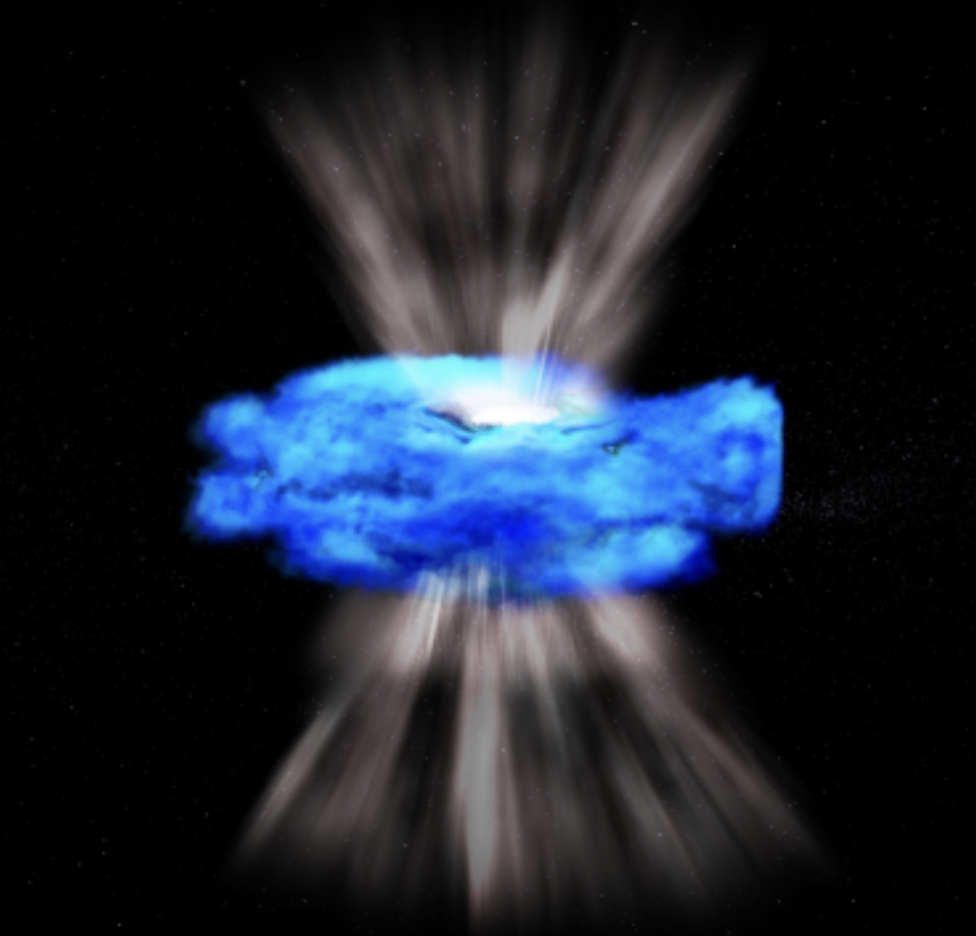
Dec 2025: Raphael's discovery of SN 2023fyq with the VLA was covered by NRAO and AUI.
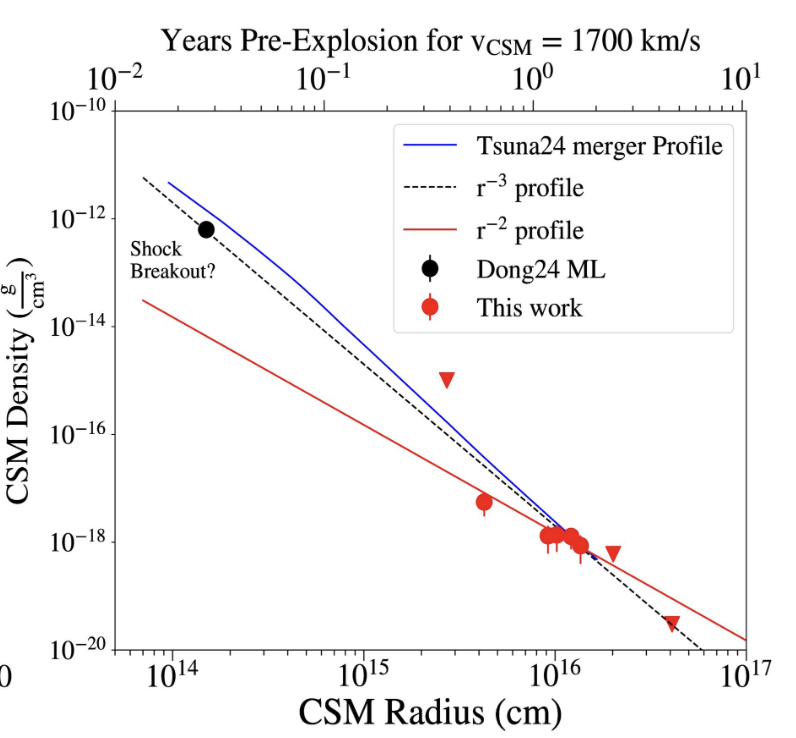
Dec 2025: Raphael studied a Type Ibn supernova SN 2023fyq with the VLA, GMRT and made first discovery of radio emission from such a supernova. The work is published in ApJ Letters.
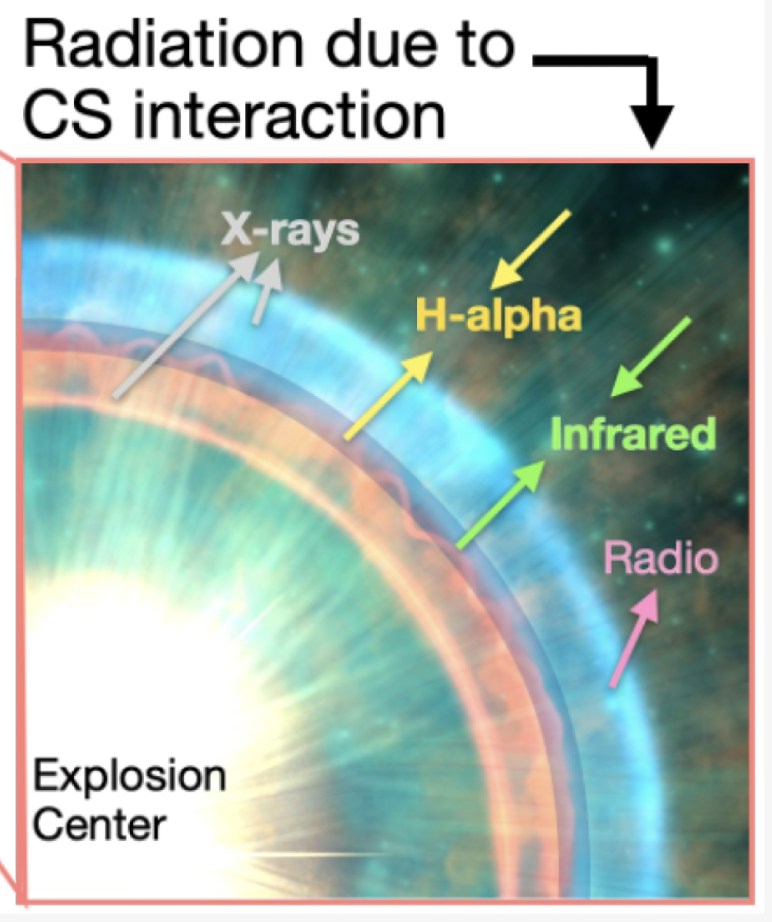
Nov 2025: Poonam's review paper on multiwavelength study of circumstellar interaction in Universe is published.
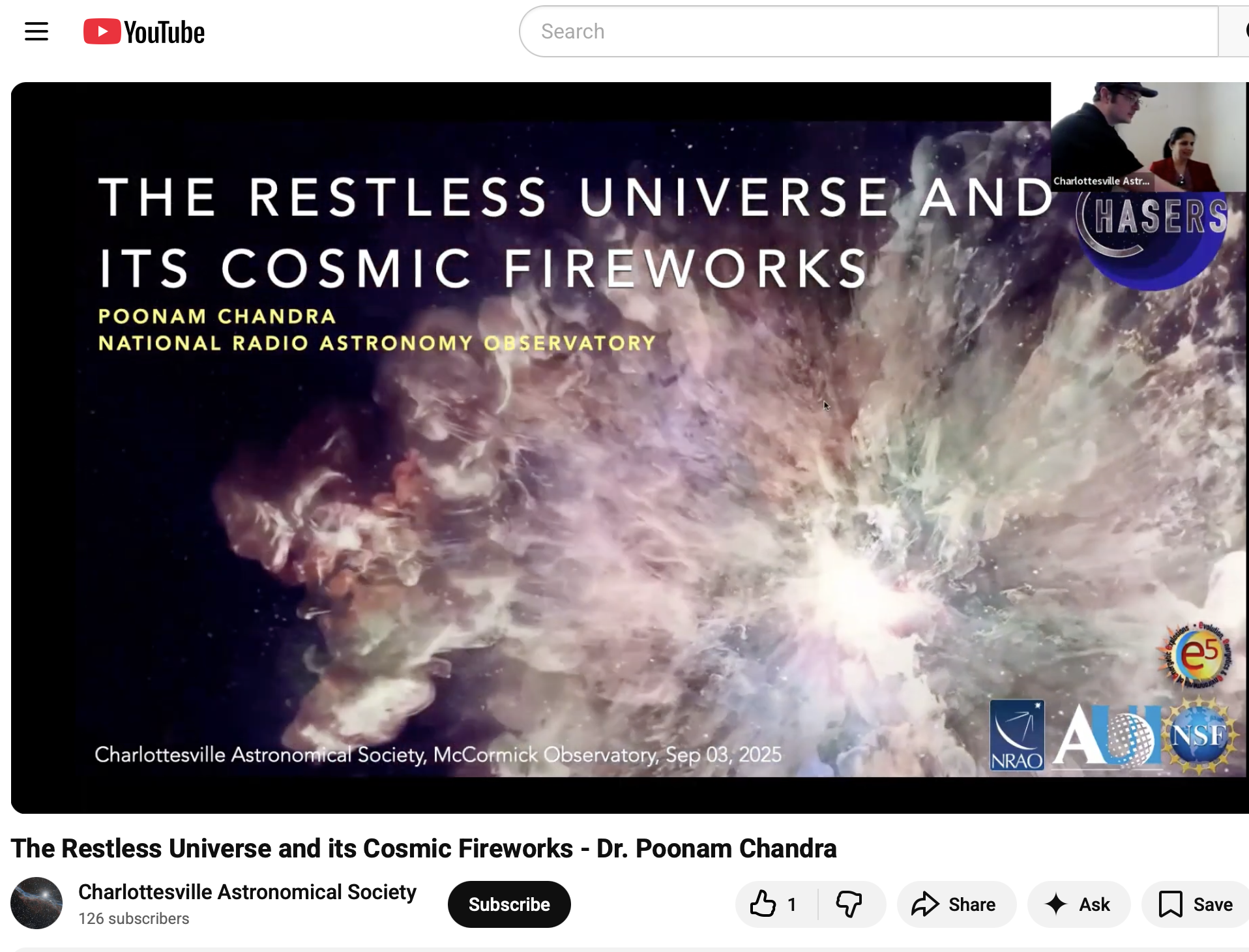
Sep 2025: Poonam talked about Restless Universe to members of Charlottesville Astronomical Society.
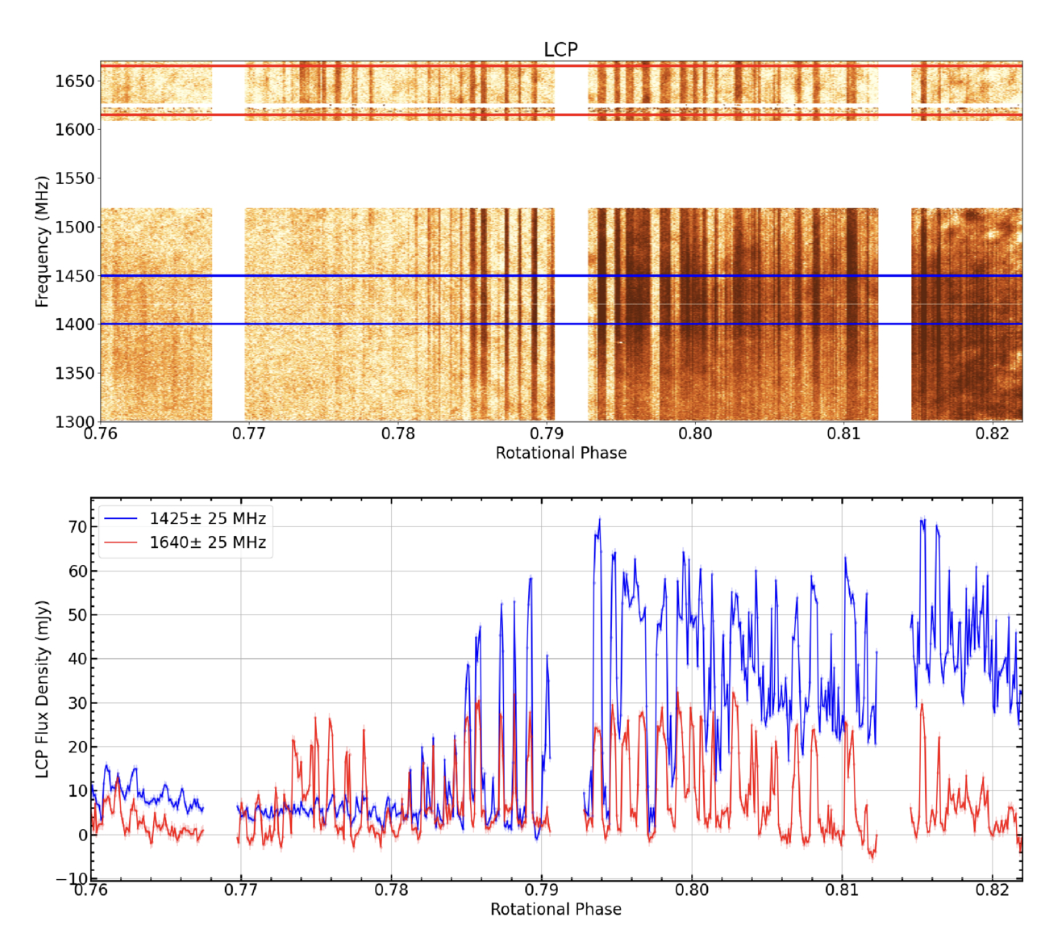
Aug 2025: Barnali Das (previous grad student of Poonam) and Poonam along with their collaborators reported first every discovery of second scale fine structures in a magnetic massive star HD 142990.

July 2025: Two members of CHASERS group, grad student Raphael Baer-Way and postbacc student Eliza Hillenkamp awarded prestigious Graduate Research Fellowships (GRFP) from the U.S. National Science Foundation (NSF).
In CHASERS group, we focus on evolution, energetics and environments of pregenitors leading to explosive transients, such as supernovae and gamma-ray bursts, hence the name E5. Supernovae explosions are the main distributors of heavy elements (responsible for life) in the universe, uniquely synthesised inside their progenitor stars, and play a decisive role in galaxy evolution. Hence they hold the key to understand our origin, our Universe, yet remain poorly understood. The very last moments of stellar deaths leading to supernovae are not well understood. Studying the supersonically moving supernova ejecta’s interaction with the surrounding slow winds, which reveals itself in radio and X-ray emission, enables one to study the stellar evolution just before the explosion. This is because the winds are formed by the mass lost from the star and their evolution carries the unique footprints of the progenitor star’s history, hence work as a “Time Machine”. We are using this novel technique to unravel the mysteries of various kinds of supernovae. We are carrying out the first systematic low-frequency survey of supernovae with the GMRT under project GLIMPSE.
We also collaborate with UVA Astronomers and maintain a larger Exploding Stars and Time Domain Astronomy Group.
Supernovae are among the most energetic phenomena in the universe, marking the explosive demise of stars. Stars with initial masses ≈3–8 M⊙ end their lives as sufficiently massive (≈0.9–1.1 M⊙) carbon–oxygen white dwarfs, which in close binaries may accrete mass until approaching the Chandrasekhar limit (≈1.4 M⊙), leading to thermonuclear (Type Ia) supernovae. More massive stars (≳8 M⊙) proceed through advanced burning stages, form iron cores, and undergo core collapse, producing neutron stars or black holes and launching core-collapse supernovae.
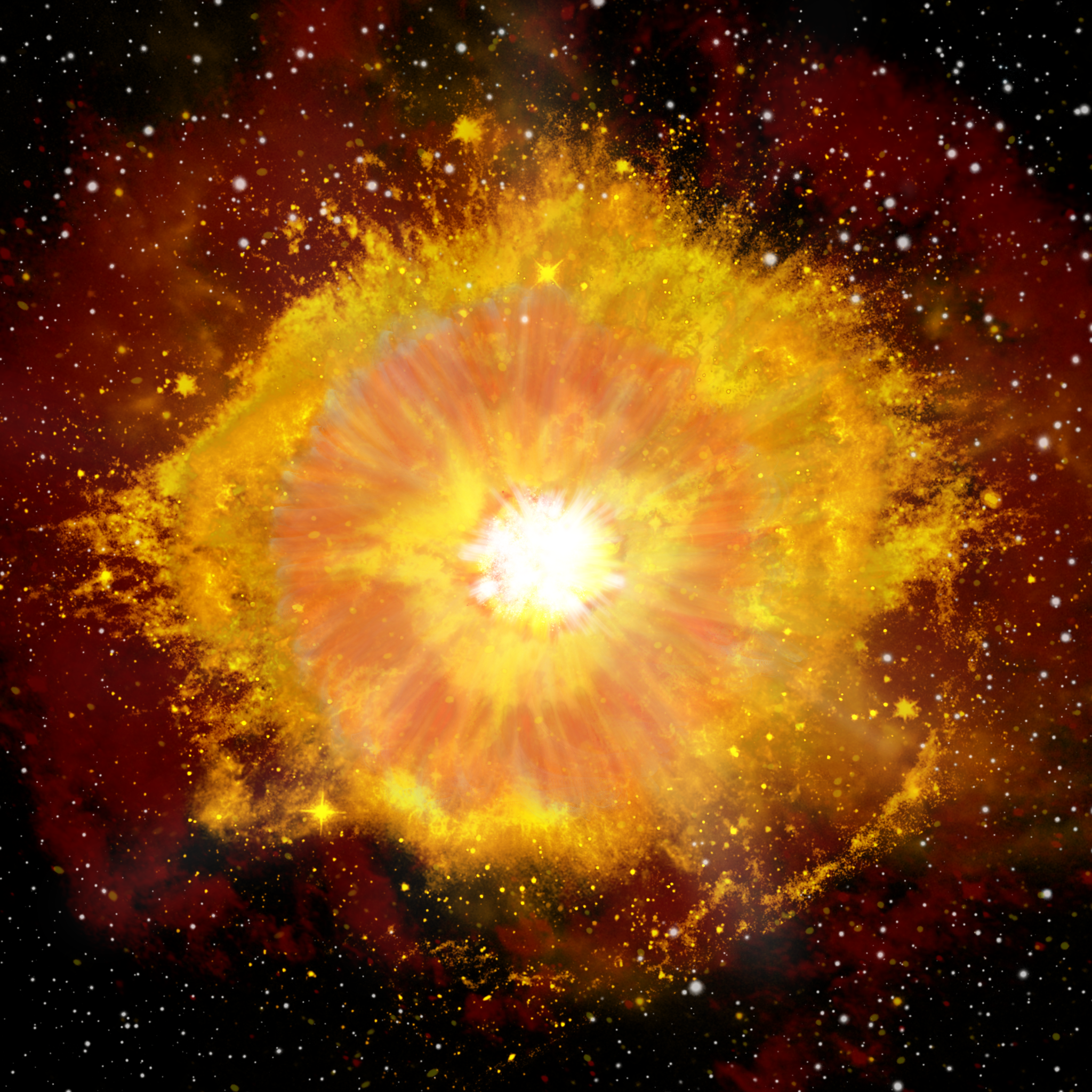
Figure 1. A massive star loses mass during its evolutionary phases and creates circumstellar medium (CSM).
Supernova classification is purely observational, primarily based on optical spectra and light curves. Ia supernovae (thermonuclear) spectra are devoid of hydrogen and show the presence of strong Silicon lines. While these supernovae are expected to be standardizable candles, observations have revealed significant diversity based on spectral features, light curves, and luminosity. Core collapse supernovae are generally classified based on the presence of hydrogen (Type II) or the absence of hydrogen (Type I) in their spectra. Amongst type II SNesupernovae class, optical lightcurves further subclassify them into Type IIP (SNe IIP) and IIL (SNe IIL). Modern untargeted surveys reveal a continuum of decline rates between the two traditional subclasses, suggesting the IIP/IIL division is phenomenological rather than being physically discrete. Type I subclass of core collapse supernovae (SNe I) are further divided into Types Ib and Ic (SNe Ib and SNe Ic, respectively). SNe Ib show strong He-I lines and are expected to come from helium stars or Wolf-Rayet (WR) stars, likely in a binary system. Lack of hydrogen as well as helium is a trademark of SNe Ic, revealing that their progenitors are stripped off of both hydrogen and helium layers at the time of explosion. In addition, a transitional category between SNe IIL and SNe Ib has been defined as Type IIb SNe (SNe IIb), which are thought to come from progenitors with partially stripped hydrogen envelopes. SNe IIP, IIL, IIb, Ib, and Ic are considered to have progressively increasing stripping of the progenitor off its layers. Some core collapse are surrounded by dense circumstellar medium and show narrow emission lines in the optical spectra, considered to be arising from the dense unshocked circumstellar medium. They are marked with a suffix "n", such as type IIn, Ibn and Icn. In addition, we have exotic broad-line Ic supernovae, electron-capture supernovae, superluminous supernovae, pair-instability supernovae and so on. While SN classification typically does not take into account the stellar death pathways, based on the existing understanding, we provide a detailed SNe classification placing the traditional classification along with the stellar death pathways.
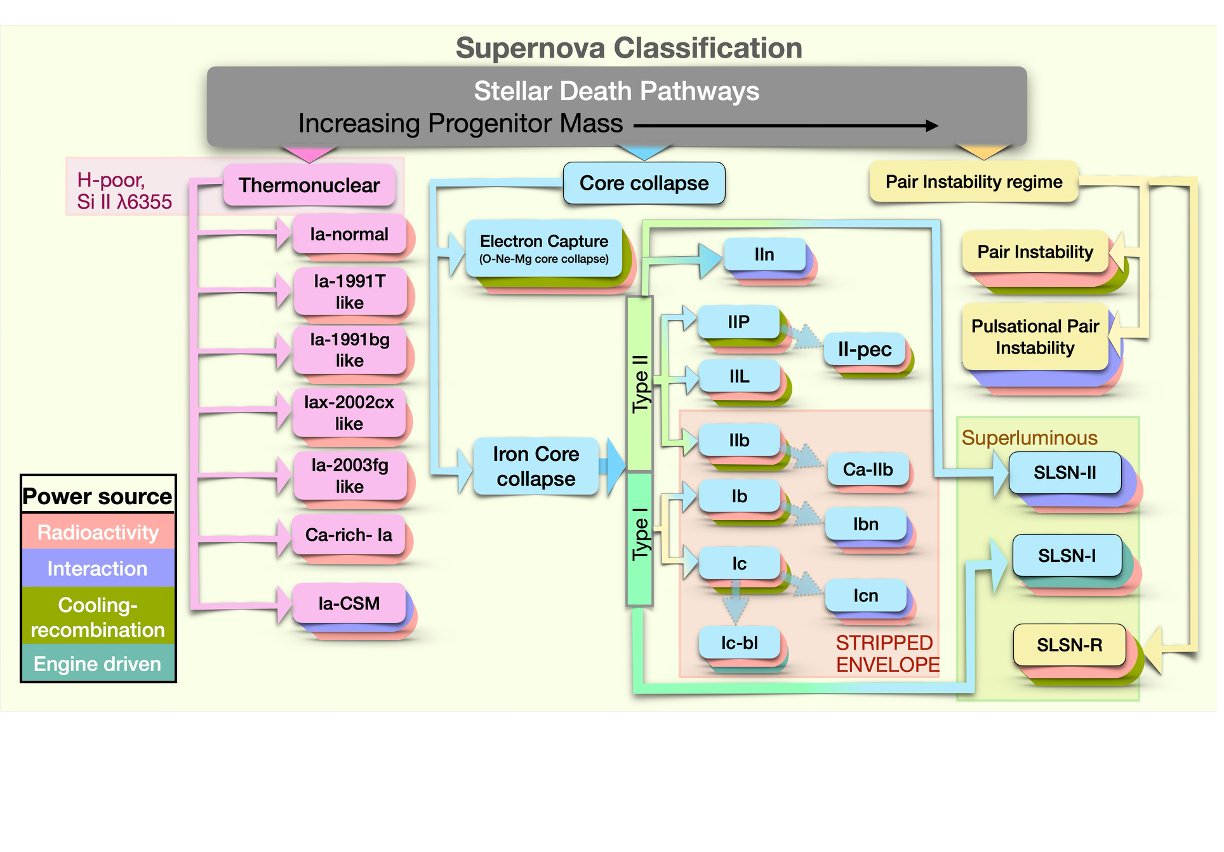
Figure 2. Supernova classification scheme combining traditional classification along with stellar death pathways. Two most significant luminosity power sources are mentioned for each subtype.
In the circumstellar interaction picture, the rapidly expanding SN ejecta with velocities tens of thousands of km per second, collide with the surrounding circumstellar material. The circumstellar matter is moving slower with velocities ranging from 10 to 1000 km//s. This generates a forward shock moving into the circumstellar medium and a reverse shock moving back into the ejecta, separated by a contact discontinuity. Rayleigh–Taylor instabilities may dominate and enhance magnetic fields. The shocks convert the kinetic energy of the ejecta into thermal and non-thermal radiation observable in different wavelengths. Hot shocks produce emission in X-ray bands, some of which gets reprocessed to lower energy radiation. The electrons accelerated in the shock, in the presence of magnetic fields (enhanced at the contact discontinuity), produce non-thermal synchrotron radio emission. In optical bands, the circumstellar interaction manifests as narrow lines due to recombination in photoionized unshocked CSM and as intermediate lines if a cool dense shell is formed at the contact discontinuity between the shocks. Infrared emission may arise as a result of circumstellar interaction from either the heated dust in the medium or newly formed dust in the post-shocked regions.
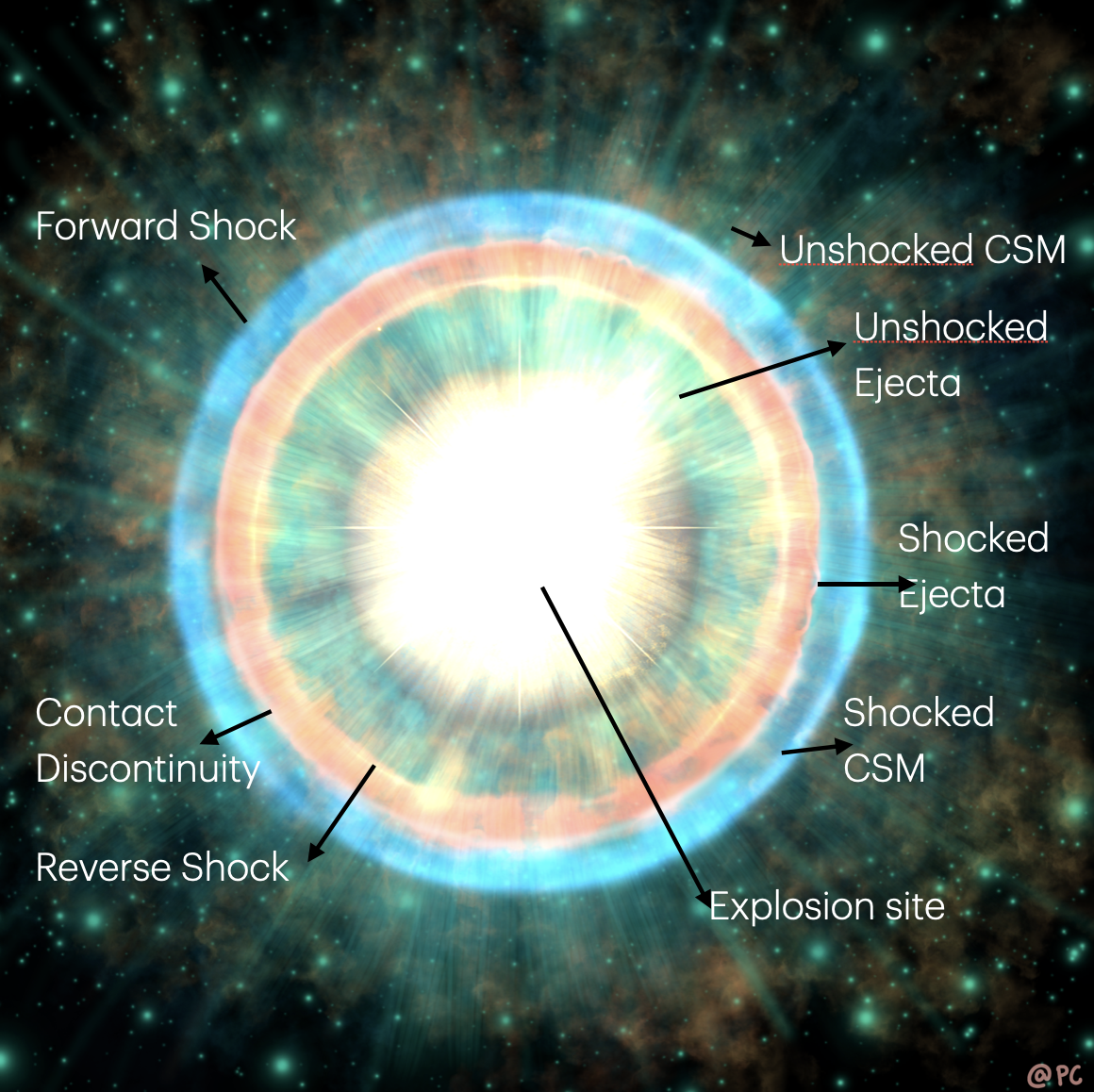
Figure 3. CS interaction picture in a typical SN. The left image shows ejecta–CSM interaction and the formation of various shocked and unshocked regions. The right side image shows the radiation produced as a result of ejecta–CS interaction.